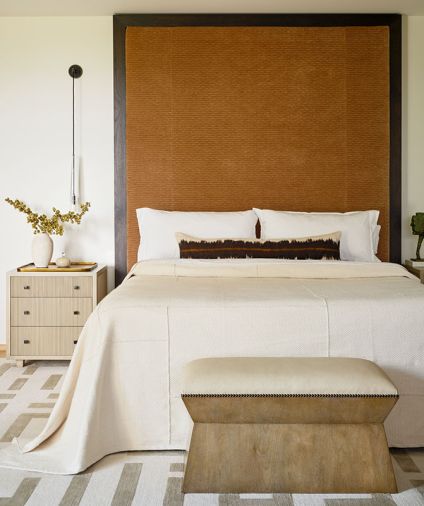










Ask interior designer Brianna Farland to describe her clients for this project and she can do it in one word: “Dynamic,” says Farland, who is owner of the Bozeman, Montana-based Farland Interiors, and has known the family, including the parents and their four children, for eight years and across several projects. “They are incredibly active with work, school, and travel, and they are truly never at a standstill,” says Farland.
Such is why when it came time to overhaul the family’s outdated and too-small home in Medina, the clients asked their team—including Farland Interiors, Studio AM Architecture & Interiors, and Bender Wasenmiller Custom Builders—to deliver them a much-needed retreat. Their new home would be “fine-tuned to how they function,” says Farland. “The primary objective was to ensure the new space is specifically tuned to their daily functions while providing a calm, hidden oasis for the family to return to.”
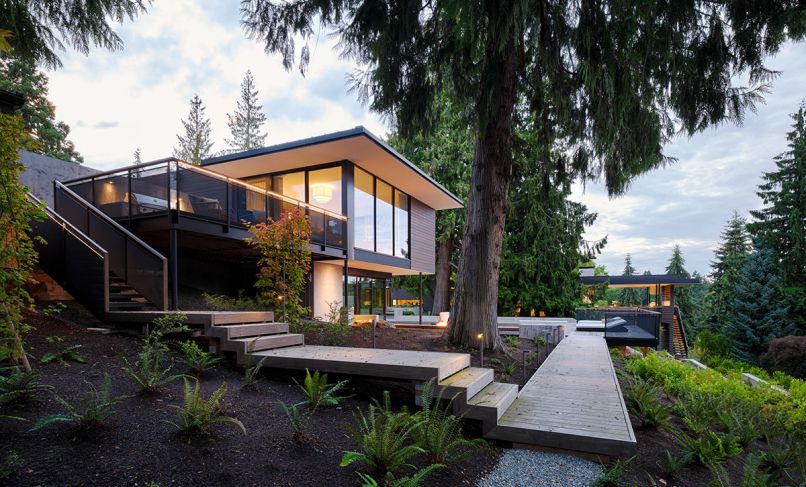
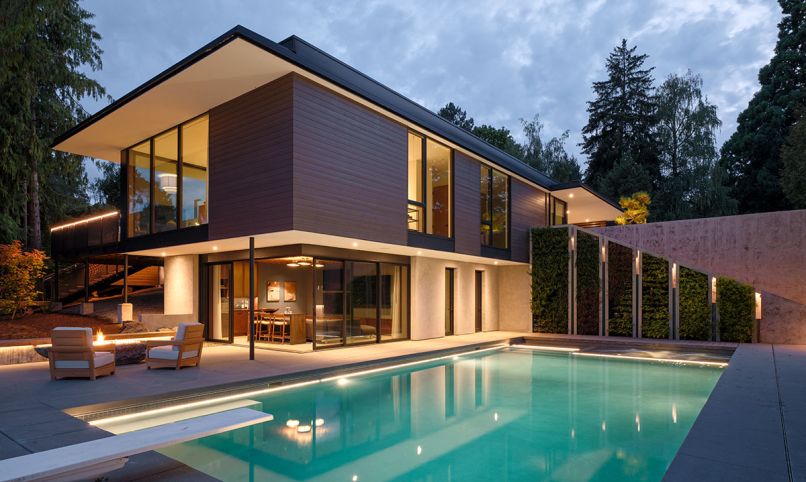
As it happens, that calm oasis kicked off with a surprising development. “One day I got a call from the owner and he told me that they bought the house next door,” says architect Mike Troyer, of Studio AM Architecture & Interiors. The team combined the two sites to a spacious 1.39 acres, which would hold, not only the 7750-square-foot main house, but a guest house, with a pool courtyard nestled in between and linking the two buildings.
Troyer embraced a terraced design to accommodate the challenge of a fifty-foot grade across the entire site. Yet from the street, the house still presents as low profile, with “natural, muted materials” for the exterior, says Troyer, including split limestone, stained cedar siding, and metal panels. “They didn’t want the house to be ostentatious in any way,” says Troyer. “They wanted it to be set into the property and to keep a natural look to it all.”
Inside, the plan is tailored to the ebbs and flows of the family’s daily life, in a neutral and natural palette elevated by expertly crafted details, the latter for which contractor Bender Wasenmiller Custom Builders is known. “We have a portfolio of contractors that we have worked with and understand how to implement the details that we draw. We have worked with them before and enjoyed our projects with them,” says Troyer. “Contemporary houses can be very hard to put together, just because the tolerances are so tight, and they always do an excellent job.”
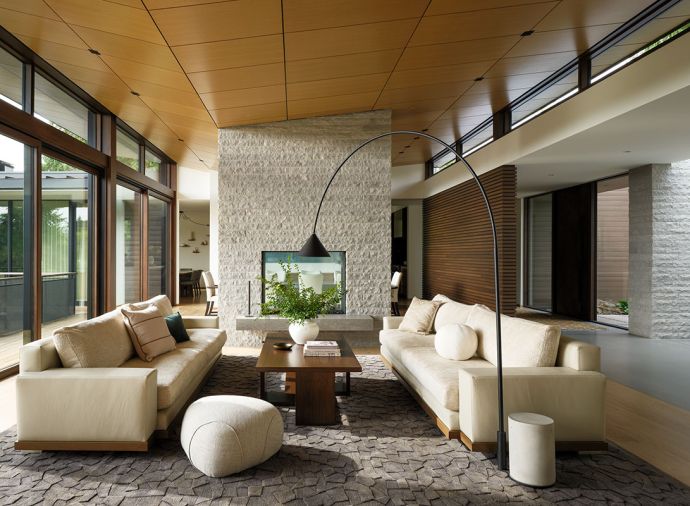
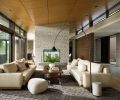
Take the ceiling treatment in the living room, covered in a neat grid of custom rift-cut white oak panels. In order to execute the design, the team spent several days mapping out the wood squares and their margins, so as not to run into problems midway through the installation. “That ceiling carries out to the exterior and the panels need to line up perfectly with everything around them. Even it was off by an eighth-of-an-inch, you’d notice it,” says contractor Steve Bender, noting how that attention to detail matters throughout a home like this, as well as the easy rapport between all of the design and construction team members. “The strength of the entire architecture team is the communication, collaboration, and the quality of information that we can get from them.”
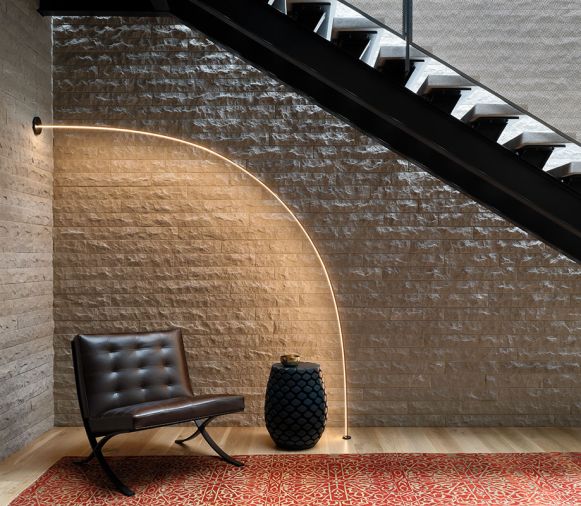
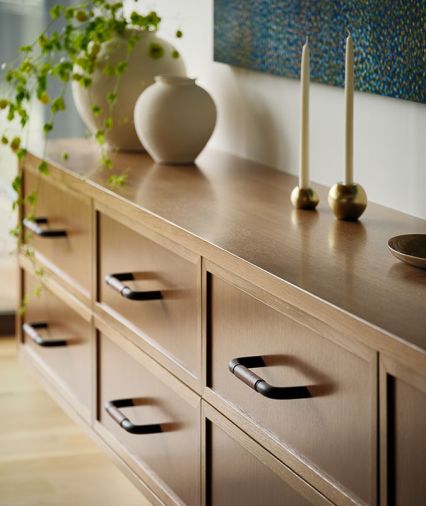
The primary material palette was kept limited so as to maintain the overall sense of calm, including things like the aforementioned rift-cut white oak, also used on cabinetry throughout, custom cut limestone in a hand-split finish on fireplaces and accent walls, and walls covered in neutral paint tones. In such a tableau, natural light acts as another prominent feature, from Troyer’s careful placement of windows. Clerestories at the ceiling filter light from up high, as does the expansive skylight over a central staircase, which washes the stone wall with sunlight at even the lowest level. “It’s a powerful design the way the architect can shed natural light down into a space that normally would never get it,” says Bender.
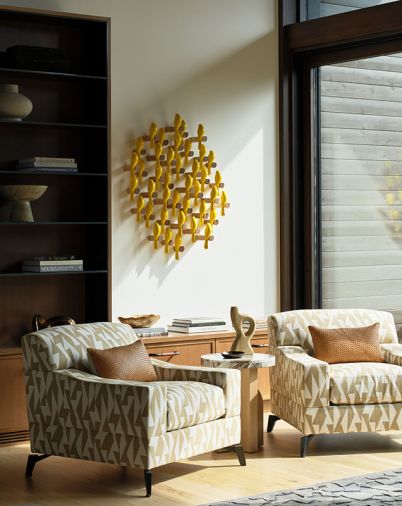
For Farland, the goal was to foster “connection from end to end in the home,” says the interior designer. “Often times, you don’t need a lot of extra fluff when the material selections and design details are thoughtfully implemented.” To start, the color palette was largely drawn from nature, with “unexpected pops of color in the art,” she says. As for other material choices, their luxe appearance belies hidden functionality, such as in the upholstery and fabric selections. No one is worried about the kids coming home from soccer practice and jumping on the couch in the living room. “Everything is very durable, but it looks so refined,” says Farland. “I think that is what makes good design.”
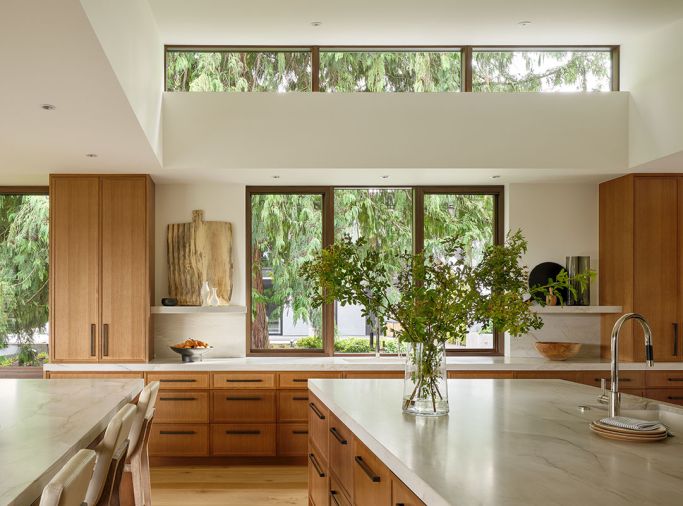
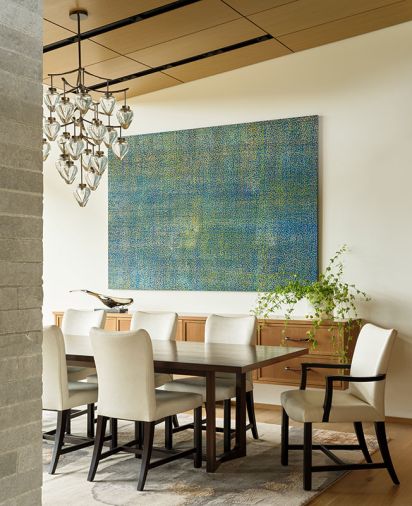
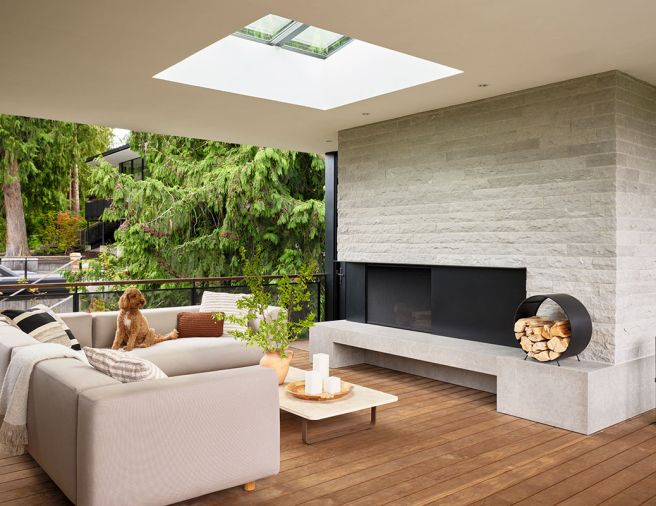
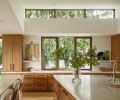
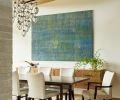
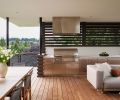
The designer then created “pockets of intimacy” throughout, from the dining room table tucked under an art glass chandelier, to the cozy couches arrayed in front of the outdoor fireplace. In the most important room, the kitchen, where “everyone is at all times,” she programmed every drawer to support easy workflow, whether the clients are engaging in breakfast and lunch prep on school mornings, or readying to entertain via a catered dinner.
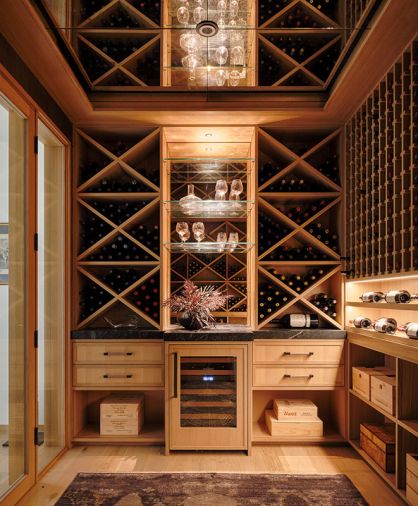
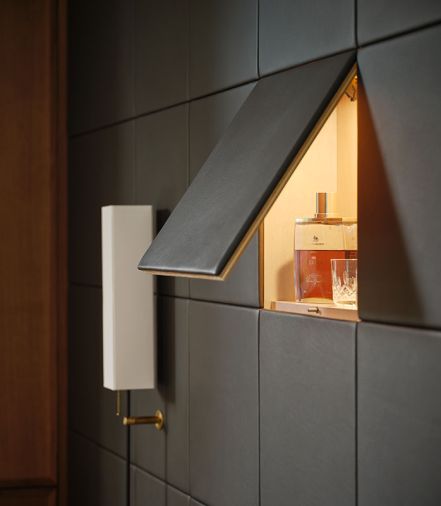
Farland also peppered in surprises here and there, like a concealed bar in an office, so as to keep things from getting too serious. “I find that there’s nothing better than making your way through a sophisticated design and discovering these joyful, whimsical moments,” says Farland. “They can be very small, like the little secret push panel concealing a whiskey hideaway.”
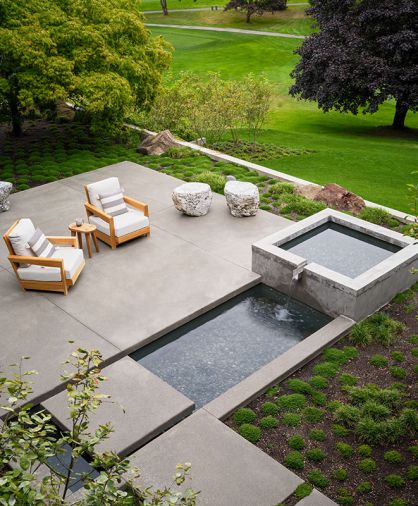
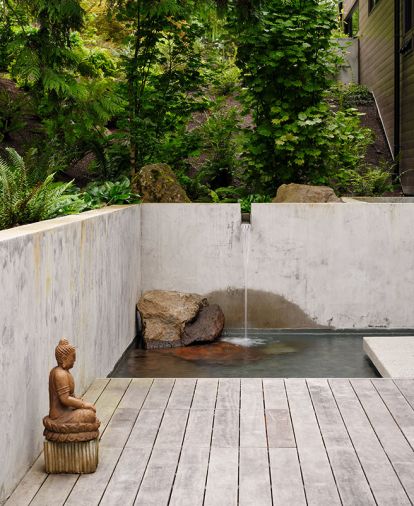
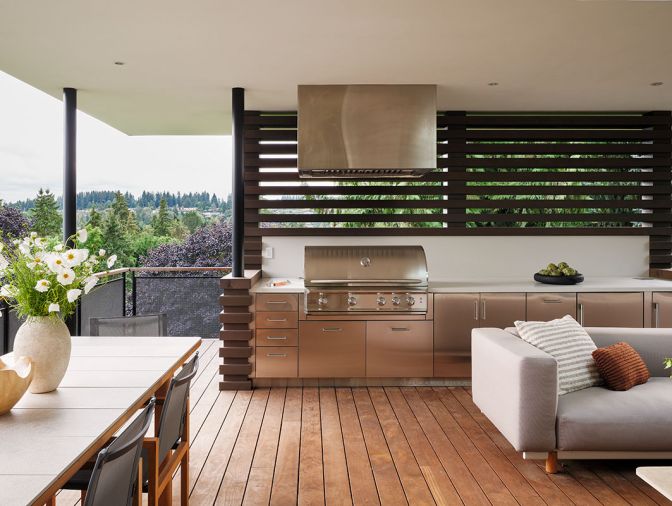
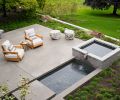
As for the yard, in addition to the pool, there’s a sports court and open lawn, as well as a covered outdoor lounge with fireplace. Thanks to landscape architecture firm Alchemie, various decks artfully interplay with water features and seamlessly connect with the terraces of the house. This means the sense of calm extends from indoors to out, as family members can fan out around the property, whether sipping coffee and watching the sunrise from the living room’s windows, or reclining on the deck and listening to the sound of water cascade into a fountain. These moments are what the entire house is about, observes Farland: “Just having a moment of pause whenever you need it.”
PROJECT SOURCES
INTERIOR DESIGN
Farland Interiors
farlandinteriors.com
ARCHITECT
Studio AM Architecture & Interiors
studioamarchitects.com
CONTRACTOR
Bender Wasenmiller Custom Builders
benderwasenmiller.com
LANDSCAPE ARCHITECT
Alchemie
alchemiesites.com
STONE
Arris Stoneworks Inc.
arrisstoneworks.com
WINDOWS
Windows, Doors & More
windowshowroom.com
Shoptalk - Brianna Farland

Brianna Farland, owner and principal designer Farland Interiors | www.farlandinteriors.com
Are there common themes that distinguish your work?
While every project is tailored to the client, my work is often defined by a sense of balance—spaces that feel layered yet restrained, comfortable yet intentional. I gravitate toward timeless materials, thoughtful proportions, and designs that feel grounded rather than overly trend-driven.
You provide full-service design services. How does this translate to your projects?
Full-service design allows us to guide a project from concept through completion. It means every detail, from architectural coordination to furnishings and finishes, is considered holistically, ensuring a cohesive result and a smoother, more enjoyable experience for the client.
How do you go about creating spaces that reflect functionality, beauty, and client uniqueness?
It starts with understanding how a client lives day to day. Functionality lays the foundation, beauty gives the space emotional resonance, and uniqueness comes from personal stories, habits, and preferences. When all three align, the space feels authentic rather than styled.
It is important that you have a personal connection with your clients. What is special about this?
Design is deeply personal, and trust is essential. Building a genuine connection allows clients to feel comfortable sharing how they really live and what matters to them. That openness leads to spaces that feel meaningful, not just visually appealing.
Why is it important to create designs that change and evolve?
Homes should be able to grow with the people who inhabit them. I design with longevity in mind; choosing adaptable layouts, timeless foundations, and pieces that can evolve over time rather than needing constant reinvention.
What is fulfilling about the interplay of interiors that project ease, warmth, and a sense of belonging?
There’s something incredibly rewarding about creating spaces that feel welcoming and lived-in rather than formal or precious. When a home offers warmth and ease, it becomes a place of comfort and connection, which is ultimately what quality design should support.
You have a reputation for working collaboratively with project teams and homeowners. Tell us about this.
Collaboration fosters clarity and trust. When architects, builders, artisans, and homeowners are aligned, the process becomes more fluid and creative. That teamwork results in better decision-making and a finished space that reflects a shared vision.
What are your takeaways from designing homes, especially as you work in markets throughout the country?
Design is deeply influenced by place, but the desire for comfort and beauty is universal. Working in different markets has reinforced the importance of respecting local context while remaining responsive to each client’s lifestyle and values.
Best materials to splurge on?
Natural stone and decorative lighting act as statement pieces, elevating a home much like art or jewelry.
What is your favorite design rule?
I tend to believe there are no fixed rules in design—there’s always a way to make something work, even when it defies convention.