





Some people remodel as soon as they buy a house, while others prefer to wait. Count the owner of this Medina home in the latter group. “The house was 30 years old and I had lived here for 25 of those years,” she says. “The kitchen was getting old by that point.” Having discovered a love for cooking in her early retirement—books by Ina Garten and Smitten Kitchen are frequently propped on the counter—a new kitchen that was designed to the cook’s preferences was next up. “One of my main goals was to make this kitchen work better for me functionally,” she says. “I also wanted to enhance the design in such a way that it was beautiful and elegant.” She reached out to her favorite contractor, Schultz Miller, who recommended they work with interior designer LeeAnn Baker Interiors for the project.
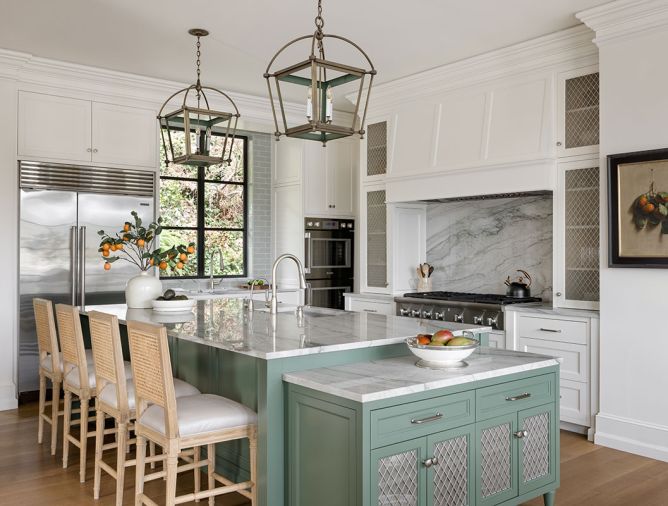
Baker and colleague Dana Barritt were struck by the home’s location. “It’s this amazing waterfront property with all this great light,” says Baker. “But inside, everything was light except for the kitchen.” They started by retooling the layout. The old island, which was an L-shape with a tiered counter, a stove and a sink, didn’t have enough prep space: “I always felt jammed into the corner of the L,” says the owner. Baker made the island all one level, and kept only a sink there, to double the amount of available prep space, and make room for seating.
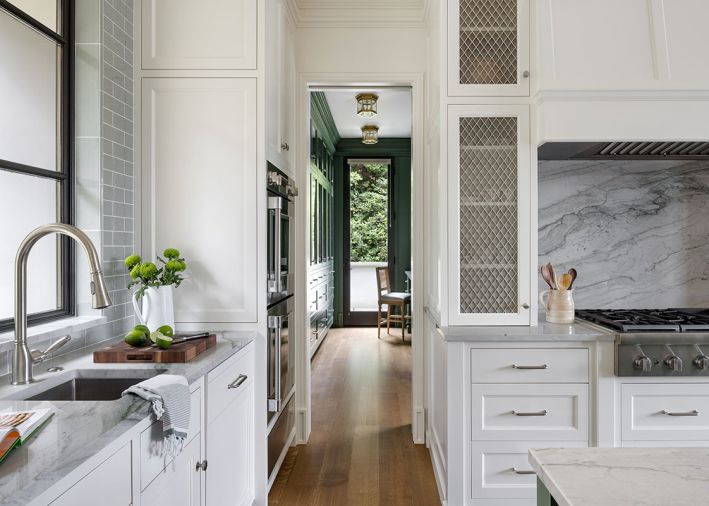
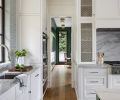
A second sink is tucked beneath the windows, flanked by the columns of the refrigerator and wall ovens, the latter which have doors with side hinges, so as to be accessible in a pass-through. A six-burner cooktop is ensconced in its own niche, surrounded by decorative cabinetry and a stone backsplash, to make for a pretty focal point when entering.
On the first walk-through, Baker immediately noticed how the open plan included crown molding in the adjoining living and dining rooms, yet skipped the kitchen. “That just made it feel different from the other rooms, but they were all open to each other, and we really wanted a cohesive look,” says Baker. She removed a soffit and continued the crown to knit all the rooms together, then stacked the cabinetry beneath it.
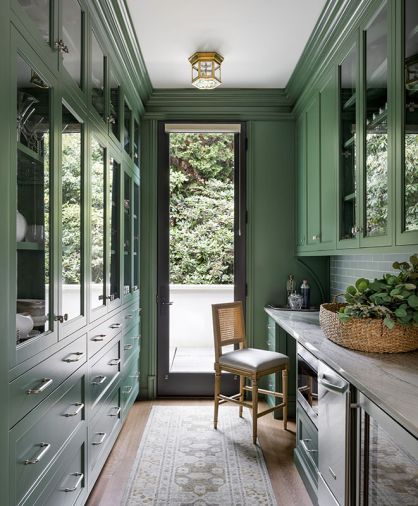
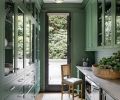
All of the perimeter cabinetry is painted a custom white color to match the trim throughout the house, and keep the room feeling light and bright, while the island grounds the space in a sage green color. That green was then extended to cover an adjacent butler’s pantry, making for a delightful discovery when you walk through its door. “It’s a little jewel box,” says the owner.
Baker packed the butler’s pantry with storage. “The owner loves to collect glassware and dishes, and has numerous sets,” says Baker. “So, it was important to incorporate areas for all of her collections.” The opposite wall has more cabinetry and a convenient staging counter, complete with a microwave, beverage refrigerator, and dishwasher, as well as a desk. That way, the owner can use the space for planning menus, or in the case of a larger event, for catering staff. “The butler’s pantry is really smart, the way it looks and functions,” says superintendent Chris Olson, with Schultz Miller.
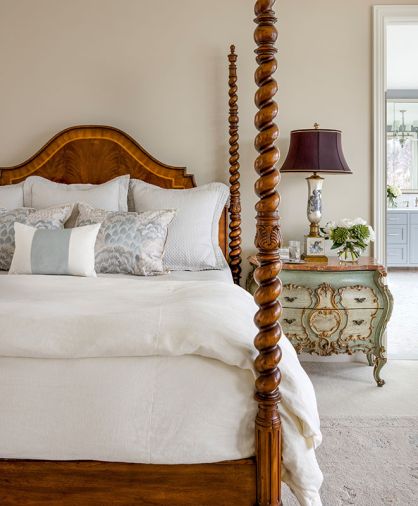
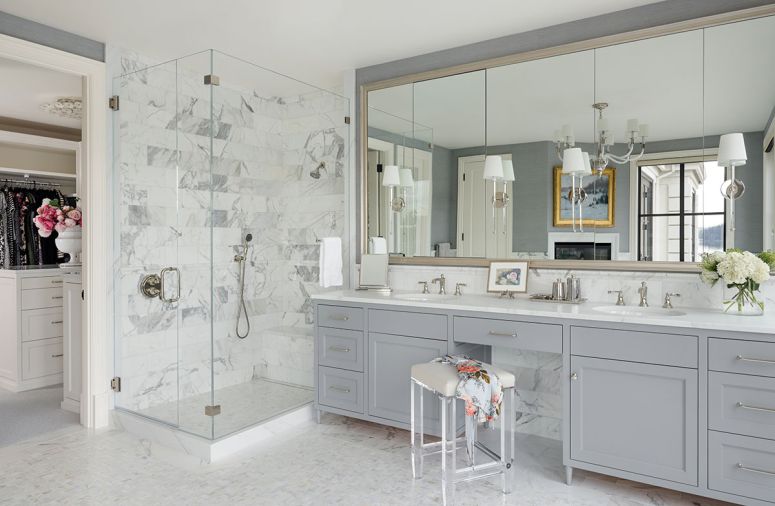
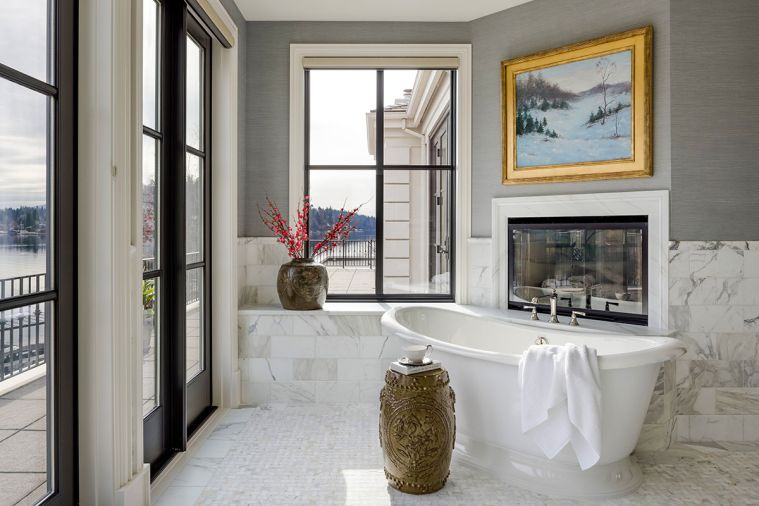
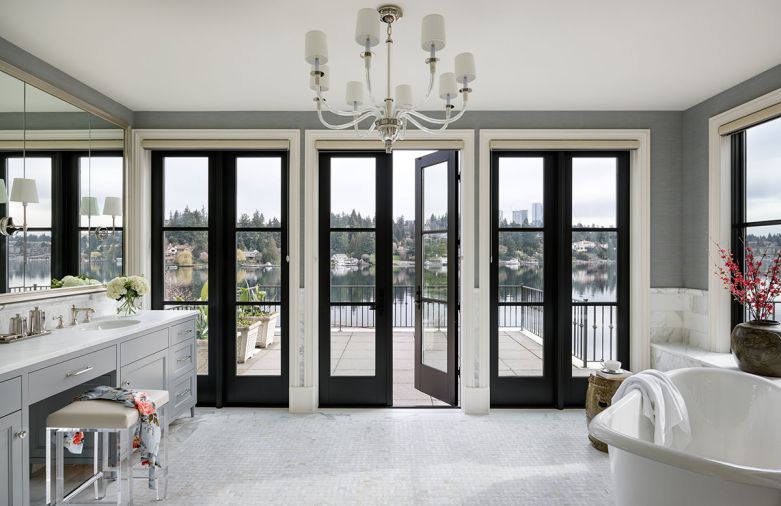
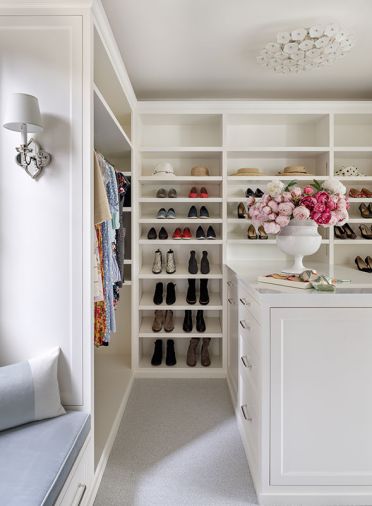
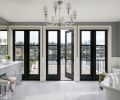
The primary suite also received a refresh, with a new vanity along one wall in the bathroom, composed of custom cabinets painted a soft gray, and joined with a new shower, Calacatta marble counters, and coordinating tile. Across the room, a too-large tub covered in shiny stone was replaced with an elegant soaking tub tucked beneath the fireplace. “There was so much stone surrounding the tub previously that it could create a really slick surface,” says Baker. “Changing that to the marble basket weave tile creates more traction on the floor.” The nearby walk-in closet is also a refuge, with a window seat, and cabinetry customized to the owner’s belongings, from the jewelry trays to the illuminated hanging rods. “I can tell the difference between black and navy pants,” notes the owner.
Now the home is equal parts function and elegance, just as the owner wanted, thanks to the excellence of the whole team. “Schultz Miller had wonderful craftsmen who could engineer solutions when we ran into challenging things, and also just do beautiful work and were great communicators,” says the owner. “And LeeAnn and her team really brought a lot to the table in terms of their talent and expertise. That to me is really the essence of what a designer should do for you: understand your needs and then apply their talents in ways that you wouldn’t think of yourself, but you really appreciate and enjoy every day.”
PROJECT SOURCES
INTERIOR DESIGN
LeeAnn Baker Interiors
leeannbaker.com
CONTRACTOR
Schultz Miller
schultzmiller.com
Shoptalk - LeeAnn Baker
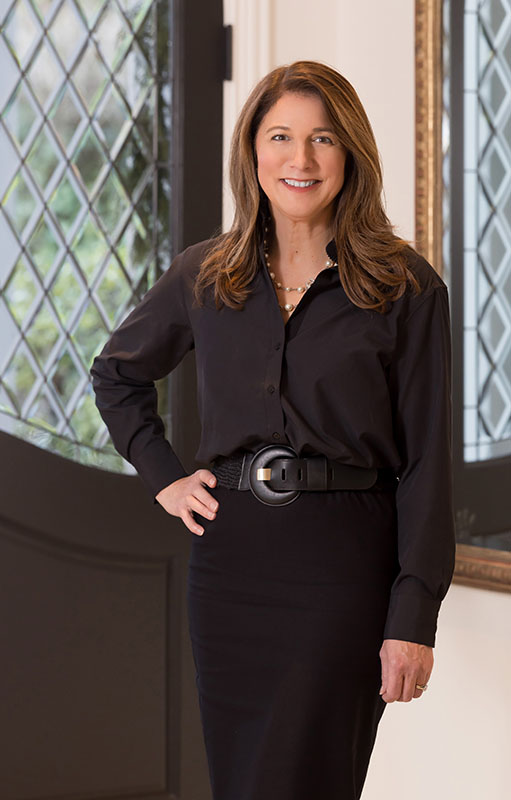
LeeAnn Baker, principal LeeAnn Baker Interiors | www.leeannbaker.com
Your firm is known for a focus on “Northwest elegance.” What does that mean to you?
It is about quiet confidence; spaces that feel layered, warm, and enduring, with a sense that nothing is accidental and nothing is trying too hard. It is our interpretation of refined living in the Pacific Northwest, rooted in natural materials, thoughtful craftsmanship, and restrained palettes that honor light, landscape, and architecture. The result is interiors that feel timeless rather than trendy, elevated yet welcoming, and designed to age beautifully over time.
What did you take from your time and studies in New York and how did it influence your design style?
New York instilled a deep respect for discipline and restraint. Space is limited, so every choice must be intentional. I learned the importance of proportion, editing, and architectural detail, which are all things that inform my work today even though it is softened a bit by the lifestyle and natural beauty here.
What steps do you take to make your designs reflect the needs of your clientele?
We begin by listening. Learning how our clients live, entertain, and envision their homes evolving over time. Those insights guide every decision, from special planning to material selection. Our goal is not to impose a signature style, but to translate each client’s lifestyle into a place that feels deeply personal, purposeful, and aligned with their values.
Having worked on projects throughout the West, are there particular differences in what clients are looking for?
While our projects span a wide geography, clients share a desire for houses that feel authentic to their setting rather than tied to a prescribed style. Whether coastal, urban, or remote, clients increasingly value design that responds to place, climate, and lifestyle. They are drawn to spaces that feel grounded, personal, and thoughtfully composed rather than overtly stylized.
What are a few indulgences you like to integrate?
We are often drawn to understated indulgences like custom millwork, layered lighting, and materials with texture like plaster and grasscloth wallcoverings. These elements elevate everyday moments and provide depth. We also love it when clients are willing to incorporate curated art.
How do you manage different architectural challenges?
With each project, we begin by honoring the architecture itself. Each building style carries its own language, proportions, and rules. Rather than imposing a signature look, we respond thoughtfully by refining, editing, and enhancing what’s already there. Our role is to create interiors that feel cohesive, enduring, and quietly elevated, regardless of whether the home is traditional or contemporary.
What are some major takeaways from designing homes?
Designing homes carries a deep sense of responsibility. These are the spaces where daily rituals unfold, and life’s most meaningful moments are held. When design is thoughtful and intentional, it supports life rather than distracting from it. A well-designed area allows comfort, calm, connection, and beauty to coexist naturally over time.
Favorite era of design?
I appreciate the Georgian & Federal order of symmetry, calm hierarchy, craftsmanship, and details.
What is your favorite area in your own home and why?
It’s the kitchen, where my family gathers regularly to unwind and stay connected. It’s where the most interesting conversations deepen, and so much of our life happens.